

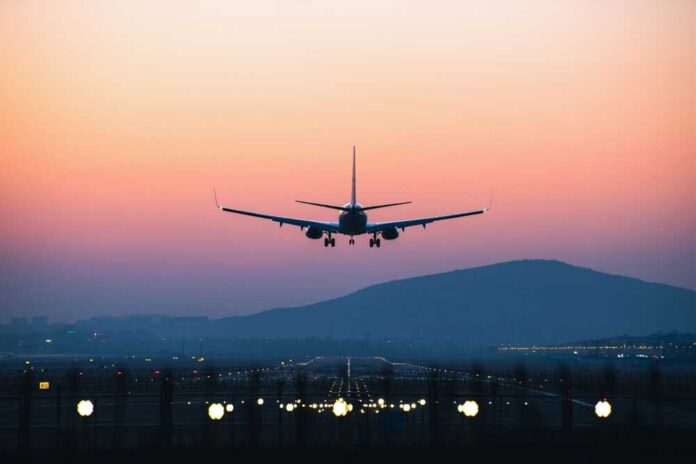
One passenger’s “honest mistake” with a charging power bank in the hold was enough to reroute a packed easyJet flight, strand hundreds overnight, and spotlight a safety rule most travelers ignore until it bites them.
Story Snapshot
- A Hurghada–London easyJet flight diverted to Rome after a passenger confessed their power bank was charging in checked luggage.[2][3]
- International rules treat lithium battery fires as a critical risk, which is why power banks belong only in the cabin, never in the hold.[2][3][4]
- The captain’s diversion, while costly and inconvenient, followed safety regulations and manufacturer guidance to the letter.[1][2][3]
- The incident exposes how little many travelers understand about battery rules—and how unforgiving modern aviation is of “small” lapses.[2][3]
How one comment from a passenger changed the fate of a night flight
The easyJet flight in question left the Red Sea resort of Hurghada bound for London Luton, a routine five-hour hop that should have ended in sleepy early-morning arrivals and grumbling about British weather.[2][3]
Hours into the flight, that script shattered when a passenger told cabin crew they had left a power bank in checked luggage and, worse, that it was actively charging another device in the hold.[2] Within minutes, the pilots diverted the aircraft to Rome Fiumicino instead of London.[2][3]
Flight diverted after passenger reveals power bank charging in checked luggage https://t.co/Xq9TnUPUe0
— FOX Business (@FoxBusiness) May 24, 2026
Flight tracking showed the jet breaking off its northwesterly track and heading toward Italy, where it landed without incident.[2][3]
The captain and airline later described the diversion as a precaution taken “in line with safety regulations,” language that signals this was not improvisation or panic but standard operating logic applied to an abnormal situation.[1][2][3]
Once on the ground in Rome, passengers disembarked normally, with no fire, no smoke, and no dramatic footage—precisely the outcome regulators design these rules to achieve.[1][3]
Why charging a power bank in the hold triggers maximum caution
The core problem is not power banks as gadgets but the lithium-ion batteries inside them.[2][3] When these batteries fail, they can enter a state called thermal runaway, a chain reaction in which heat feeds on itself, temperatures spike, and surrounding materials can ignite.[2]
Aviation authorities have spent years cataloging incidents of lithium-powered devices overheating in flight, often in overhead bins or seat pockets where crew could intervene quickly with specialized extinguishers and containment bags.[2]
That experience led international aviation bodies such as the International Air Transport Association and the International Civil Aviation Organization to draw a hard line: power banks and similar lithium devices must go in carry-on bags, not checked luggage.[2]
Industry rules also say they must not be used or charged during the flight.[4] The logic is simple and rooted in common sense: a problem in the cabin can be seen, smelled, and fought; a problem in the cargo hold, surrounded by luggage, can smolder unseen until it becomes catastrophic.[2][3]
Regulations, captain’s authority, and the cost of erring on the safe side
Reports of the incident are remarkably consistent on key facts. A passenger admitted the power bank was in the hold and actively charging.[1][2][3]
EasyJet confirmed that once the crew learned about this, the captain chose to divert “as a precaution in line with safety regulations.”[1][2][3]
The airline also stressed that safety is its “highest priority” and that it operates in strict compliance with aircraft manufacturers’ guidelines, which are notoriously regarding fire risks.[1][3]
Critics might argue that if the plane landed safely and nothing else happened, the diversion would look excessive. That argument ignores how aviation safety works.
When a low-frequency, high-consequence risk appears—especially one specifically covered by international rules—the captain’s duty is to remove uncertainty, not to gamble that “it will probably be fine.”[2][3][4]
Diverting to a major European airport with full firefighting capability reflects a culture of prudence that has delivered the safest era of air travel in history.
Passenger fallout, personal responsibility, and what this signals going forward
The human cost was real. Passengers expecting to reach London that night instead spent it in Rome, dealing with hotels, missed connections, and the usual domino effect of disruption.[2][3]
EasyJet arranged accommodation and meals “where available” and provided refreshments for those who remained at the airport.[2][3]
For families, older travelers, and anyone on tight schedules, that is not a minor inconvenience. It is a full-blown travel derailment triggered by one small device packed in the wrong place.
EasyJet flight to London diverted to Rome Monday after a passenger reported leaving a power bank charging in checked luggage. Airline confirmed the diversion was a safety precaution due to fire risk from lithium batteries.
— 💕BadBoyEmann💕 (@EmmanuelOc64999) May 25, 2026
Regulators have already done the homework on lithium batteries and drawn clear lines about where they belong.[2][3][4]
When a passenger ignores or misunderstands those lines, the consequences do not stop with them; they ripple through hundreds of strangers and require costly interventions by airlines and airports that ultimately show up in everyone’s ticket prices.
Sources:
[1] Web – UK-bound EasyJet flight made emergency diversion to Rome after …
[2] Web – EasyJet Flight Makes ‘Precautionary’ Diversion After Passenger …
[3] Web – Charging Power Bank Diverts easyJet Flight – Simple Flying
[4] Web – EasyJet London flight forced to divert after power bank charged in …