

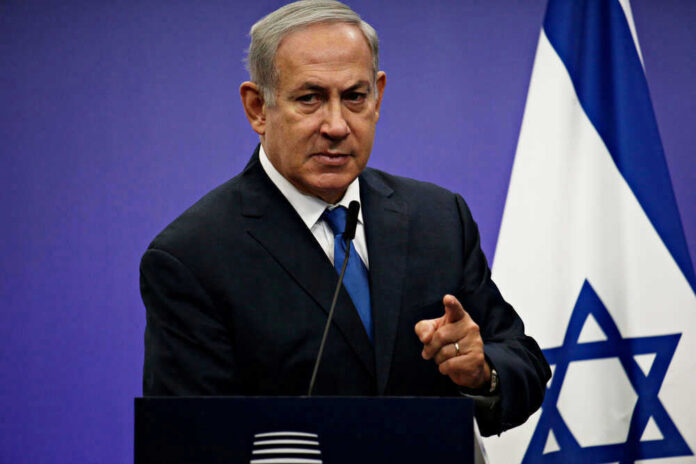
President Trump’s blunt rebuke of Benjamin Netanyahu and warning about derailing Iran negotiations spotlights a hard line on restraining escalation while keeping America—not foreign leaders—in the driver’s seat.
Story Highlights
- Axios reports Trump told Netanyahu he was “crazy” during a call over potential Israeli action in Lebanon [3].
- Trump acknowledged using the term and said Israeli moves were complicating peace talks with Netanyahu’s
- Netanyahu allies framed the clash as a tactical disagreement, not a strategic break [4].
- The episode reflects familiar anonymous-source leaks that shape early narratives in foreign policy crises [5].
What Trump Acknowledged And Why It Matters
Axios reported that President Donald Trump told Israeli Prime Minister Benjamin Netanyahu he was “crazy” during a tense call about prospective Israeli military action in Lebanon, citing two sources familiar with the conversation [3].
Trump later acknowledged using the term and argued that certain Israeli decisions were complicating United States efforts to keep talks with Iran on track [5].
The White House has not released a transcript, leaving the public record anchored to sourced reporting and Trump’s on-the-record confirmation of the core remark.
Trump’s stated aim was to prevent a wider regional blowout that could endanger United States forces, spike energy prices, and give Tehran leverage during sensitive diplomacy [5].
He reportedly “put the brakes on” a potential Israeli move that he believed risked escalation at the worst possible moment, according to Axios’ account of the call [3].
For those long frustrated by endless wars and foreign entanglements, the emphasis on timing, deterrence, and American leverage reflects a familiar Trump doctrine: strength first, escalation last, and no blank checks.
How Israel Framed The Dispute
Israeli accounts and Netanyahu supporters described the clash as a tactical dispute within a shared strategic outlook, pushing back on the notion of a rupture with Washington [4].
Regional context remains intense, with repeated hostilities along the Lebanon front shaping operational decisions. Israeli arguments stress deterrence against Hezbollah and Iranian proxies while maintaining alignment with the United States on core goals.
That portrayal counters claims of policy breakdown and positions the quarrel as a heated but bounded argument over immediate steps, not long-term strategy [4].
Supporters of Israel’s approach contend that a decisive military posture deters larger wars, while critics warn that precipitous moves can sink diplomacy before it delivers results.
Trump’s acknowledgment that he used sharp language while pressing for discipline underscores the friction point: how to confront Iran’s network without triggering a broader conflict that empowers Tehran.
Axios’ sourcing indicates he believed certain Israeli actions risked crossing that line just as American negotiators sought leverage at the table [3].
Lessons From Anonymous-Sourced Diplomacy
Early narratives in national security crises often stem from a single origin report and then reverberate across media ecosystems before documents appear.
Military.com’s coverage captured Trump’s confirmation of the “crazy” remark and his view that Israeli actions complicated Iran talks, providing an on-record anchor while much of the color still traces to Axios’ unnamed sources [5].
That blend—one attributed quote plus anonymous reconstruction—illustrates how quickly perceptions harden even as official transcripts remain undisclosed.
Trump Unleashed: "Bibi, Are You Effing Crazy?!"
Trump just sat down with Miranda Devine, and this was NOT a normal political interview.
He confirmed he cursed out Netanyahu because, according to reports, Israel's actions in Lebanon were escalating the conflict and threatening…
— Parallel Polis in Exile 🇺🇸 (@Polis_in_Exile) June 4, 2026
For readers who demand constitutional restraint, predictable markets, and clear American interests, two takeaways stand out. First, the United States must retain decision-making authority over actions that could drag our troops into wider conflict or cause energy prices to explode at home.
Second, allies deserve respect, but American lives and prosperity come first. Trump’s insistence on sequencing—negotiate from strength, avoid needless escalation, and keep leverage—tracks with years of costly misadventures abroad [5].
What This Means For U.S. Leverage On Iran
Timing drives leverage. Trump’s argument that certain Israeli operations were complicating talks suggests a belief that Tehran exploits chaos to stall, divide allies, and demand concessions [5].
Curtailing an ill-timed strike can preserve negotiating power while keeping pressure calibrated against Iran’s regime and its proxies.
If accurate, Axios’ account that Trump slowed the tempo of events reflects a familiar tactic: deny the adversary easy propaganda, protect U.S. forces and infrastructure, and keep the initiative with Washington—not with militant groups or foreign capitals [3].
Bottom Line For Conservative Readers
Americans are right to expect firm support for Israel’s security alongside disciplined leadership that prevents avoidable wars and inflationary oil shocks. Trump confirmed the sharp language and framed it as part of efforts to keep Iran talks viable and escalation contained [5].
Israeli voices described the dispute as tactical rather than strategic [4]. Until documents surface, details rest on a blend of on-record acknowledgment and sourced reporting. What is clear is the priority: American strength, sober timing, and leverage that serves U.S. interests first.
Sources:
[3] YouTube – Trump Admits To Calling Netanyahu ‘Crazy’, Israeli PM Responds
[4] Web – “You’re fucking crazy”: Trump fumes at Netanyahu in call on Lebanon
[5] Web – Trump said to yell at Netanyahu: ‘You’re f**king crazy. You’d be in …