
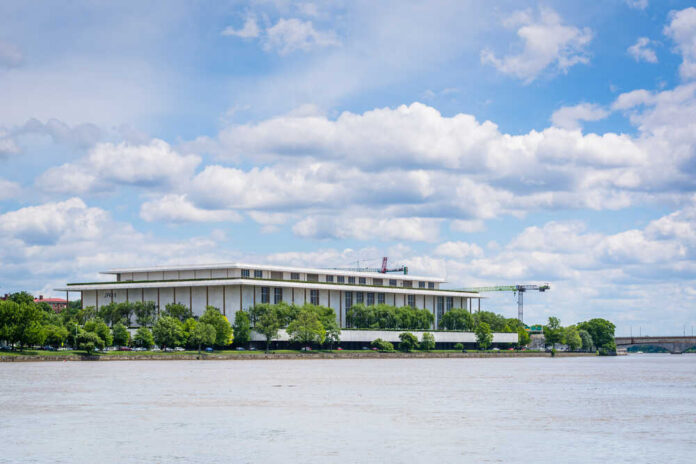
The fight over putting President Donald Trump’s name on the John F. Kennedy Center for the Performing Arts just turned into a sharp reminder that Congress, not appointed boards, ultimately owns the names on America’s monuments.
Story Snapshot
- A federal judge ruled the Kennedy Center board broke the law by adding Trump’s name to the building without Congress.
- The same ruling blocked a two‑year renovation shutdown the board had already voted through.
- The judge said the Kennedy Center’s founding law leaves its name locked to President John F. Kennedy unless Congress acts.
- The decision exposes how partisan branding clashes with statutory limits and basic separation of powers.
How Trump’s Name Ended Up On A Congressional Memorial
The John F. Kennedy Center for the Performing Arts is not just another arts venue; Congress legally created it as a living memorial to President John F. Kennedy and wrote that name into federal law.[2] Months ago, the Kennedy Center’s board voted to add Donald Trump’s name to the building and official materials, effectively trying to rebrand the institution without a single vote in Congress.[2]
Media framed it as Trump imprinting his legacy on Washington’s cultural crown jewel, but the real question was whether the board had any lawful authority to do it.[2]
U.S. District Judge Christopher Cooper answered that question bluntly. According to his ruling, Congress gave the Kennedy Center its name, and only Congress can change it.[2] He wrote that the law that established the center “made it clear it can only be named for President John F. Kennedy, and only Congress can change the name.”[1][2] That is straightforward statutory reading, not judicial creativity. When a statute says what something is called, unelected board members do not get to improvise their own marquee.
Why The Judge Said The Board Broke The Law
Judge Cooper concluded the board “overstepped its statutory bounds” by unilaterally adding Trump’s name.[2] He framed the core issue as a yes‑or‑no question: “May the John F. Kennedy Center for the Performing Arts be renamed absent Congressional authorization?” His answer: “The answer, plain from the face of the statute, is no. Nor can any other individual be memorialized on the front portico of the building.”[2]
That language matters. The judge did not merely strike a logo; he treated the attempted renaming as an illegal memorialization on a congressionally dedicated structure.
On the remedy side, Cooper ordered Trump’s name stripped from the façade and from “official materials,” including digital and physical signs, within two weeks.[2] News outlets report similar directives covering the Kennedy Center’s website and branding, with all Trump‑Kennedy references to be removed on that timetable.[1][2]
For an administration that had already celebrated the new signage, the order functions as a public reset: the building goes back to being the John F. Kennedy Center, full stop, unless and until Congress says otherwise.
The Blocked Shutdown And The Question Of Power
The renaming fight was only half the story. The Kennedy Center board had also voted March 16 to close the facility for roughly two years for major renovations, with work slated to begin in July.[2] Judge Cooper froze that plan, calling the vote “ill‑informed and seemingly preordained” and faulting the board for acting “with no regard for its legal obligations.”[2]
Reports describe the ruling as halting the shutdown for now while allowing more limited work to move forward.[2][3] So the court did not deny that the building needs repairs; it questioned the way the board tried to bulldoze process.
From a common‑sense perspective, this goes beyond Trump and Kennedy. It is about basic accountability. A congressionally chartered institution tried to lock in a years‑long closure and rechristen a national memorial with a different president’s name, all by internal vote. The judge’s order says: you cannot treat a national monument like your private nonprofit. When Congress creates a memorial, the name and function belong to the people through their elected legislature, not to a rotating cast of political appointees.[2][3]
What This Says About Separation Of Powers And Legacy Politics
This case plugs into a broader pattern: fights over who controls the names and symbols of federal institutions. When Congress explicitly sets a name, courts typically guard that prerogative unless lawmakers clearly hand the power down. Here, no one has pointed to statutory language delegating renaming authority to the Kennedy Center board.[2]
Supporters of the Trump rebrand can argue the board only meant a ceremonial add‑on, but once the name hits the façade and “official materials,” judges understandably treat it as an attempted legal renaming, not just décor.
🚨 US judge orders removal of Trump’s name from Kennedy Center. The ruling follows a lawsuit challenging the naming, citing political motivations. #Breaking #Politics
— Flash Feed Macro (@FlashFeedMacro) May 29, 2026
The politics are obvious: Trump’s allies want physical, permanent markers of his presidency in the nation’s capital, while critics want congressional memorials insulated from partisan branding.[2] But the legal principle cuts cleaner than the politics. If any administration could slap its favorite name onto a congressional memorial by leaning on a board, the statutory limits would collapse. Whether you favor Trump, Kennedy, or neither, tight respect for the text of the law protects everyone from the next round of political vanity projects.
Sources:
[1] Web – Judge says Kennedy Center board broke law putting Trump’s name on …
[2] YouTube – Judge rules Trump’s name add to Kennedy Center illegal
[3] YouTube – Judge says Trump’s name was illegally added to the Kennedy Center