
Six flag-draped cases arriving at Dover are a stark reminder that Middle East decisions made in Washington quickly become American funerals back home.
Story Snapshot
- President Donald Trump attended a dignified transfer at Dover Air Force Base on March 7, 2026, honoring six Army Reserve soldiers killed in Kuwait.
- The soldiers were struck by an Iranian drone attack on March 1, one day after the U.S. and Israel launched a military campaign against Iran.
- The fallen served with the 103rd Sustainment Command, a logistics unit responsible for essential supplies like fuel, food, and ammunition.
- Vice President JD Vance, Defense Secretary Pete Hegseth, and DNI Tulsi Gabbard were among the officials present alongside the First Lady.
Dover’s solemn ritual marks the first U.S. fatalities of the Iran conflict
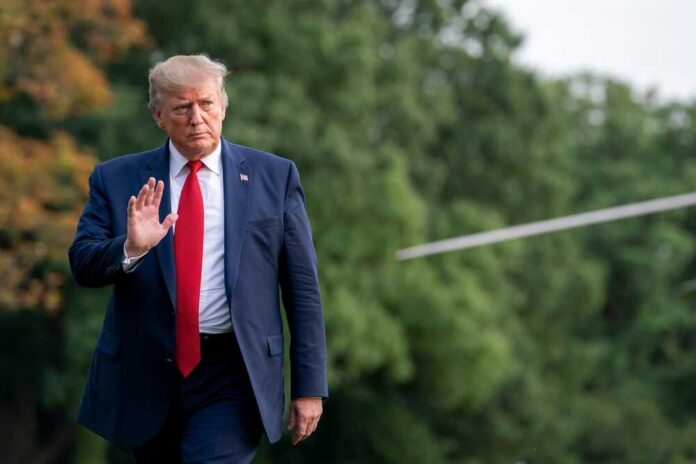
President Trump traveled to Dover Air Force Base on March 7, 2026, to take part in the dignified transfer of six U.S. Army Reserve soldiers killed in Kuwait. The transfer brought the first American war dead of the escalating Iran conflict onto U.S. soil.
The service members were killed March 1 when a drone struck a U.S. command center in Port Shuaiba, Kuwait, according to multiple reports.
The dignified transfer is not a political rally or a speechmaking moment; it is a tightly controlled military procedure where flag-draped cases are carried from an aircraft to waiting vehicles while families and officials stand in silence.
Reports described Trump saluting as the remains were moved, joined by First Lady Melania Trump. The ceremony’s strict formality underscores what many Americans already know: the cost of conflict is measured in names, families, and empty seats at home.
Who the fallen were—and why a logistics unit matters in modern war
The six soldiers came from the 103rd Sustainment Command, an Army Reserve logistics organization based in Des Moines, Iowa. Their mission was not glamorous, but it is indispensable: moving and managing the supplies that keep forces operating, including fuel, food, and ammunition.
Reporting identified the fallen as Sgt. 1st Class Nicole Amor, Capt. Cody Khork, Chief Warrant Officer 3 Robert Marzan, Maj. Jeffrey O’Brien, Sgt. 1st Class Noah Tietjens, and Sgt. Declan Coady, who was posthumously promoted.
Family statements highlighted the whiplash that often follows deployments to “support” locations that suddenly become targets. One relative stressed that people do not think of Kuwait as a place where something will happen—until it does.
Another tribute described a “baby brother” who was loved, language that cuts through the abstractions of strategy and brings the story back to what citizens ultimately entrust to government: the lives of their sons and daughters serving under orders.
Trump grieves with families during return of soldiers killed in war in Middle East https://t.co/anZIULDomT
— Dallas Morning News (@dallasnews) March 8, 2026
The strike’s timing shows how fast escalation can hit U.S. forces overseas
The March 1 drone strike landed just one day after the United States and Israel launched what coverage described as a sweeping military campaign against Iran in late February 2026. That timing matters because it illustrates the speed at which retaliation can threaten American personnel spread across the region.
Reporting also noted that more than 20,000 U.S. troops are positioned in the Middle East, meaning any widening conflict carries immediate risk for American families far from the battlefield.
Officials framed the attack as Iran’s “opening salvo,” language that signals the administration views the strike as part of a broader confrontation rather than an isolated incident.
The available reporting does not fully detail operational security, air defense posture, or the command center’s protective measures, leaving unanswered questions about how the drone penetrated defenses. Still, the basic fact pattern is clear: U.S. forces in theater remain exposed as tensions rise and tactics evolve.
A unified presence from top officials—and a reminder of commander-in-chief duties
Trump was not alone at Dover. Reports indicated Vice President JD Vance attended with Second Lady Usha Vance, alongside Defense Secretary Pete Hegseth and Director of National Intelligence Tulsi Gabbard.
That lineup matters politically because it demonstrates the administration’s intent to present a unified national-security front while Americans process the first fatalities of the war. It also matters culturally: many voters expect leaders to show up, quietly, when the country buries its own.
Trump has previously described dignified transfers as among the toughest duties of the presidency, and the Dover appearance fits that long-standing expectation that presidents personally honor fallen troops.
Senator Joni Ernst, a Republican and combat veteran, praised the soldiers’ “noble mission” protecting the homeland, reflecting a traditional view that service abroad can deter threats before they reach American streets. What comes next will depend on decisions made in real time as the conflict continues.
The Pentagon process continues after the cameras leave, with the remains transferred to the Dover mortuary for preparation and coordination with families. Additional reporting referenced other deaths connected to the broader conflict, separate from this transfer, underscoring the possibility that Dover will see more arrivals if escalation continues.
For Americans frustrated by years of chaos abroad and weak messaging at home, the takeaway is straightforward: strategic choices have a human cost, and accountability starts with telling the public the truth.
Sources:
Trump attend return six US troops killed Iran war
Trump to join families for return of soldiers killed in Middle East war