

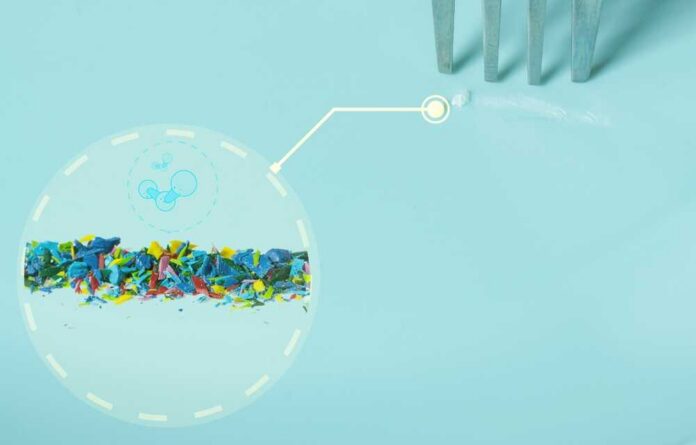
Microplastics invade human blood, placentas, and organs, prompting HHS to launch a $144 million federal assault on this invisible threat buried in America’s water and bodies.
Story Highlights
- HHS Secretary Robert F. Kennedy Jr. announces STOMP program, investing $144 million to detect, study, and remove microplastics from human bodies.
- EPA Administrator Lee Zeldin adds microplastics to the Contaminant Candidate List for the first time, targeting drinking water contamination.
- Program prioritizes vulnerable groups like pregnant women, children, and high-exposure workers amid evidence of widespread bioaccumulation.
- Proposals open now, with summaries due May 6, 2026, signaling urgent federal action on a growing health crisis.
Joint Federal Offensive Targets Microplastic Invasion
HHS Secretary Robert F. Kennedy Jr. and EPA Administrator Lee Zeldin unveiled coordinated actions against microplastics at EPA headquarters in Washington, D.C.
The STOMP program, managed by ARPA-H, allocates $144 million to standardize detection tools, quantify health impacts, and develop removal strategies.
Kennedy declared, “We are dealing with a measurable, growing presence inside the human body.” This first-of-its-kind effort addresses particles under 5 mm found in blood, lungs, livers, kidneys, placentas, arterial plaques, and brains.
It responds to public alarms over plastics in food, air, water, and bodies, prioritizing measurement before broader regulation. Vulnerable populations—pregnant individuals, children, and workers—stand to benefit most from these tools.
Microplastics Confirmed in Every Human Tissue Tested
Microplastics enter the environment through littering, runoff, and wastewater, evading standard filters, as noted by the World Health Organization.
Human studies detect them universally: every tested placenta contains them, while animal research links nanoplastics to gut and liver alterations mirroring depression and colorectal cancer patterns.
Correlations exist with chronic diseases, yet knowledge gaps remain in measurement consistency, harmful subtypes, and accumulation pathways.
No prior federal program tackled human body removal at this scale; scattered organ detection studies lacked standardization. This initiative fills those voids with multidisciplinary teams and CDC validation for rigorous results.
The Department of Health and Human Services is introducing a first-of-its-kind program to study microplastics and the effect they have on the human body, HHS Secretary Robert F. Kennedy Jr. announced.https://t.co/MBFsgKN3tv
— WJZ | CBS Baltimore (@wjz) April 2, 2026
ARPA-H Drives Measurement and Removal Innovations
ARPA-H structures STOMP in phases: Phase 1 focuses on precise measurement and biological mechanisms, Phase 2 on safe removal technologies.
Proposals require solution summaries by May 6, 2026, and full submissions by June 22, 2026. Experts like ARPA-H’s program director emphasize gold-standard tests, such as clinical burden quantification under 15 minutes and a $50 cost, for widespread access.
Inconsistent lab techniques have hindered consensus; this program establishes a solid foundation. Kennedy and Zeldin, under President Trump’s Make America Healthy Again agenda, frame it as decisive protection against an urgent threat that has been ignored for too long.
Impacts Span Health Equity, Economy, and Regulation
Short-term gains include monitoring tools and accelerated research from the influx of proposals; long-term outcomes promise removal strategies, chronic disease insights, and policy guidance.
Affected communities encompass chronic patients and the public exposed via water and food. The $144 million spurs biotech and pharma innovation, scrutinizes water treatment and plastics industries, and advances health equity.
Politically, the EPA’s CCL addition—first for microplastics alongside pharmaceuticals—prioritizes funding and potential regulation.
Both conservatives and liberals share frustration with government inaction in the face of elite-driven failures; this cross-aisle federal push protects individual health and traditional self-reliance against unseen pollutants that are eroding the American Dream.
Sources:
HHS Announces $144 Million Program to Study Effect of Microplastics on the Human Body
EPA adds microplastics to drinking water contaminant list
ARPA-H launches $144m STOMP to tackle micro- and nanoplastics in humans
ARPA-H Launches Groundbreaking $144 Million Program to Combat Toxic Microplastics in the Human Body
HHS to Examine Health Effects of Tiny Plastic Particles That Leach Into Water
EPA, HHS target microplastics in water and human bodies
HHS To Study Effects Of Microplastics On The Human Body