
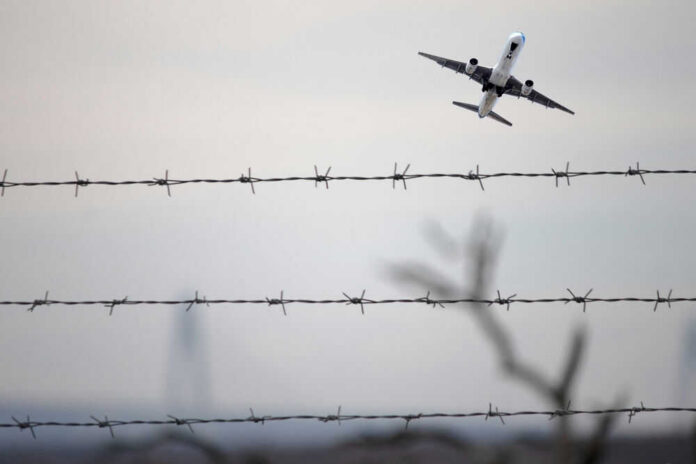
A JetBlue pilot says a drone slammed into his jet over New York at 3,000 feet—and the airplane walked away without a scratch.
Story Snapshot
- Pilot reports a direct drone hit above the cockpit during JFK approach at 3,000 feet
- Incident fits a growing pattern of “unverified strikes” in crowded American airspace
- Real debate: Are drones a serious threat, or are pilots seeing ghosts in a stressful sky?
The moment a JetBlue pilot said, “We collided with a drone”
JetBlue Flight 948 was descending toward John F. Kennedy International Airport early Monday morning, lining up for landing after an overnight trip from Las Vegas.
As the Airbus A321 passed through about 3,000 feet over the coastline around 7:15 a.m., the captain called air traffic control with a chilling report: “We collided with a drone back there in the turn… It hit us right above the cockpit.” The crew did not declare an emergency and said they could continue the approach.[2][6][7]
The jet landed safely at JFK just a few minutes later, with no special assistance requested from the tower. Passengers deplaned like it was any normal morning flight. There were no reports of smoke, strange noises, or alarm lights in the cockpit.
From the cabin, most customers likely had no idea their pilot had just told controllers he thought a drone struck the aircraft at high altitude, in tightly controlled airspace normally off-limits to hobby flyers.[2][5][6]
What the inspections found when the plane rolled into the gate
After landing, JetBlue pulled the aircraft from service and sent it straight for a post-flight inspection. The airline later said that maintenance teams checked the exterior and found “no damage or evidence of a collision.”
The Federal Aviation Administration echoed that result, stating that its review also saw no physical proof the plane had hit anything at all. No dents above the cockpit, no cracked windows, no scraped paint. In other words, the metal told a different story than the man at the controls.[1][2][4][6]
A JetBlue pilot reported their plane possibly struck a drone at 3,000 feet while on final approach to John F. Kennedy International Airport. The plane landed safely, and all passengers were able to exit normally. https://t.co/OirVItoMia pic.twitter.com/JlqKgCnToK
— CBS Evening News with Tony Dokoupil (@CBSEveningNews) June 29, 2026
JetBlue framed the event in careful corporate language: the crew “reported a possible drone encounter,” not a confirmed strike. That single word “possible” shows where the industry’s mindset sits.
The pilot’s perception matters, but the inspection report rules. For a large airline operating under tight safety rules and big legal exposure, a public claim of a drone hit without damage goes straight into a gray zone between caution and doubt.[4]
Why a “phantom strike” is more common than you think
This JetBlue case is not the first time a pilot has claimed a drone collision and engineers later found nothing wrong with the aircraft. A similar episode hit United Airlines in San Diego, where a flight crew reported colliding with a bright red object they believed was a drone at about 4,000 feet and more than 200 miles per hour.
The Boeing 737 landed on time, maintenance inspected the jet, and again, no damage showed up. The pattern suggests a simple but uncomfortable fact: human eyes can misjudge fast-moving objects under stress.[11][12]
Policy researchers studying drone and wildlife risks go even further. One major review of national airspace data concluded that, to date, no commercial drone or consumer quadcopter has been definitively proven to have collided with a manned aircraft in United States airspace.
That does not mean it has never happened. It means that when investigators demand hard evidence—metal damage, broken components, recovered drone pieces—almost no events pass that test. The gap between what pilots feel and what engineers can see is now a central issue in this debate.[12]
Are drones a real danger or a useful villain?
Engineering tests show a drone strike could cause serious harm. Impact studies suggest that even a mid-size quadcopter can shred jet engine fan blades or crack aircraft structures if it hits at high speed in the wrong spot.
Real-world cases outside the United States have documented suspected drone hits that left clear nose damage and disrupted onboard radio and communication gear.
So the “nothing to see here” crowd underplays a real physical risk. When plastic, metal, and lithium batteries meet thin aluminum at hundreds of miles per hour, physics does not care about politics.[14]
🚨 #BreakingNews 🚨
"JetBlue Flight 948 Reports Mid-Air Drone Strike on Final Approach to JFK Airport; FAA Launches Investigation After Airbus A321 Lands Safely With No Damage"
➡️ JetBlue Flight 948, an Airbus A321 traveling from Las Vegas to New York City, reported a direct… pic.twitter.com/eD8E5UxxIw— BreakinNewz (@BreakinNewz01) June 29, 2026
At the same time, American data show drone collisions with passenger planes are extremely rare compared with the thousands of bird strikes recorded every year. Common sense says you do not ban new technology out of fear, but you also do not ignore obvious rules.
Flying a drone near a major airport, at altitudes where jets line up to land, breaks Federal Aviation Administration restrictions and basic respect for human life. If investigators ever prove a drone operator caused a real strike, that person should face serious civil and criminal liability.[10][12]
The unresolved questions hanging over Flight 948
Several key facts remain missing. Investigators have not named any drone operator or recovered any drone fragments near the reported impact area. No public radar track or airport surveillance footage has confirmed a small object at 3,000 feet on the jet’s flight path.
The only primary evidence right now is the pilot’s voice on the radio recording and the altitude and location data from flight tracking services, which place the plane near Sea Bright, New Jersey, about 10 to 12 miles from JFK when the strike was reported.[1][2]
From a safety culture view, the system did what it should. The pilot reported a threat. Air traffic control logged it. JetBlue pulled the aircraft and inspected it. The Federal Aviation Administration launched an investigation. Where things get tricky is public trust.
If authorities later conclude there was no drone at all, many will see another example of media hype and regulatory theater. If evidence surfaces that a drone was present but obliterated on impact, people will ask why our enforcement and tracking tools still cannot keep hobby gadgets out of jet corridors in 2026.[1][3][10][12]
Sources:
[1] Web – JetBlue flight reports striking drone while landing at JFK
[2] Web – What happened to JetBlue Flight 948? FAA investigates reported …
[3] Web – DRONE STRIKE REPORTED at JFK Airport 29 JUN …
[4] YouTube – JetBlue pilot reports striking drone as flight approached JFK Airport
[5] Web – Possible drone collision with JetBlue jet under FAA investigation
[6] X – JetBlue flight 948 reported hitting a drone at
[7] Web – JetBlue flight reports drone strike near JFK, FAA investigates
[10] Web – A JetBlue flight struck a drone while approaching John F. …
[11] Web – JetBlue pilot reports hitting drone while landing at New York’s JFK
[12] Web – DRONE STRIKE REPORTED at JFK Airport 29 JUN 2026 – Instagram
[14] Web – JetBlue aircraft strikes drone on approach to New York JFK A …