
President Trump’s controversial celebration of Robert Mueller’s death has reignited fierce debate over a special counsel investigation that conservatives long viewed as a politically motivated witch hunt against an innocent administration.
Story Snapshot
- Former FBI Director and Special Counsel Robert Mueller died March 20, 2026, at age 81, with his family revealing he had battled Parkinson’s disease
- President Trump posted on social media expressing gladness over Mueller’s death, stating he “can no longer hurt innocent people,” drawing immediate backlash
- Mueller’s 2017-2019 Russia probe found no evidence of a Trump campaign conspiracy despite indicting associates, yet refused to exonerate the President on obstruction
- The investigation’s inconclusive findings cost taxpayers millions while paralyzing Trump’s first-term agenda and weaponizing law enforcement against political opponents
Mueller’s Death Sparks Political Firestorm
Robert Mueller passed away on March 20, 2026, as confirmed by his family and the law firm WilmerHale, where he worked after government service. His family requested privacy while revealing he had suffered from Parkinson’s disease, which left him too frail to testify before the House Oversight Committee in recent years.
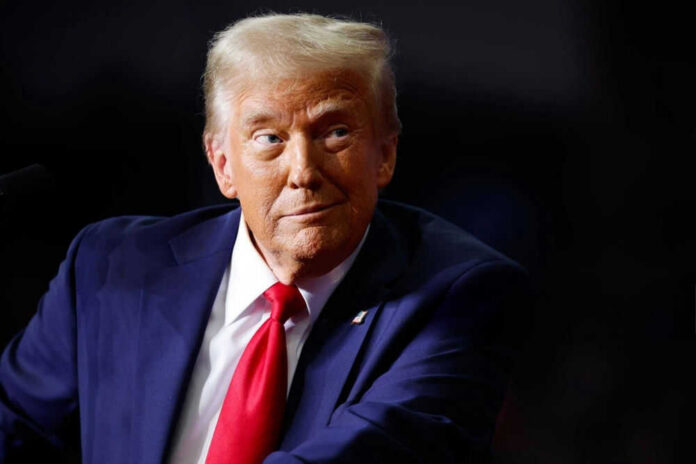
The announcement immediately triggered political controversy when Trump responded publicly, stating “Good, I’m glad he’s dead. He can no longer hurt innocent people!” This blunt assessment reflected the President’s longstanding view that Mueller’s investigation was an illegitimate attack on his administration and supporters.
The statement divided Washington along predictable lines. Republican Senator Thom Tillis called Trump’s comment a “sad statement” and insisted Mueller “deserves respect,” while Democrats like Senator Mark Warner mourned Mueller’s commitment to the rule of law.
Yet for many conservatives who watched the Russia investigation consume Trump’s first term, the President’s words captured legitimate frustration with a probe that ultimately vindicated their belief in a deep-state vendetta. Mueller’s investigation found no evidence of Trump campaign collusion with Russia despite two years of intensive scrutiny and aggressive prosecutions of peripheral figures.
The Russia Investigation’s Troubling Legacy
Mueller served as special counsel from 2017 to 2019, appointed by Deputy Attorney General Rod Rosenstein to investigate alleged Russian interference in the 2016 election. The probe resulted in indictments of figures like Paul Manafort and Roger Stone, but critically failed to establish any conspiracy between the Trump campaign and Russia.
Despite this exoneration on the central charge, Mueller’s March 2019 report refused to clear Trump on obstruction allegations, leaving a cloud of suspicion that Democrats exploited for political gain. This ambiguous conclusion exemplified government overreach, where prosecutors without evidence to charge still cast doubt on an elected leader.
The investigation revealed troubling patterns of political bias within federal law enforcement. Trump attempted to remove Mueller during the probe, viewing it as an illegitimate effort to undermine his presidency—a perspective many conservatives shared as text messages and testimony exposed anti-Trump sentiment among investigators.
The special counsel’s work cost taxpayers over thirty million dollars while distracting from urgent policy priorities like border security, regulatory reform, and economic growth. For Americans frustrated with unelected bureaucrats wielding unchecked power, Mueller’s investigation became a symbol of Washington’s weaponization against outsiders who threaten the establishment.
Robert Mueller, former FBI director, Russia special counsel, dead at 81 https://t.co/9dTf0i5aLg pic.twitter.com/gaJHZHwcQG
— New York Post (@nypost) March 21, 2026
Mueller’s Career and the Rule-of-Law Debate
Mueller’s defenders point to his decorated career: Marine Corps service, prosecuting major criminals as a DOJ attorney, and leading the FBI from 2001 to 2013 through post-9/11 reorganization. Appointed by President George W. Bush and extended by President Obama, he earned bipartisan respect for transforming the Bureau’s counterterrorism capabilities.
WilmerHale praised his integrity, and the FBI Agents Association mourned a leader who strengthened national security infrastructure. Yet this distinguished record makes his handling of the Russia probe more troubling, not less—experienced enough to recognize insufficient evidence, he nonetheless pursued an investigation that conservatives believe damaged constitutional norms by criminalizing political differences.
Former special counsel Robert Mueller has died at 81 – Shortly after Mueller’s death was reported, #Trump said in a Truth Social post, “Good, I’m glad he’s dead.” #uspoli #news https://t.co/95pkzawURn
— GlobeNewsWire (@BCNewsWire) March 21, 2026
Mueller once told Tabor Academy students that “integrity means you’re only as good as your word,” yet his special counsel work left many questioning whether that principle applied when investigating a Republican president. The probe’s partisan origins—rooted in the discredited Steele dossier and surveillance abuses against Trump associates—undermined its legitimacy from the start.
While Mueller’s death closes this chapter, the damage persists: conservatives remain vigilant against similar abuses, recognizing that unaccountable prosecutors can threaten any administration that challenges Washington’s status quo.
Trump’s blunt response, however controversial in tone, reflects millions of Americans’ belief that Mueller’s investigation represented government persecution rather than impartial justice.
Sources:
ABC News: Robert Mueller, former FBI director and special counsel, dies