
President Trump’s off-the-cuff vow to “take” Cuba landed the same week U.S. actions helped push the island into a nationwide blackout—raising hard questions about where maximum pressure ends and formal confrontation begins.
Quick Take
- Cuba’s power grid collapsed amid an energy crunch after oil imports reportedly stopped on January 9, 2026.
- The Trump administration’s January 29 executive order declared a national emergency and opened the door to tariffs targeting countries that supply oil to Cuba.
- U.S. efforts in February reportedly included blocking tankers headed to Cuba—described as the first effective blockade since the 1962 Cuban Missile Crisis.
- Trump’s “take Cuba” rhetoric is drawing intense attention because the administration’s pressure campaign is already tightening the screws on fuel, flights, and tourism.
Trump’s “Take Cuba” Line Collides With a Real-World Energy Breakdown
President Donald Trump’s remarks —saying he would “take” Cuba and that he “could do anything” with the island—hit as Cuba’s electricity system buckled into a total power blackout.
Reporting describes a country suffering up to 20 hours of daily outages, rationed gasoline, reduced flights, and mounting economic disruption.
Cuban President Miguel Díaz-Canel has acknowledged talks with the United States while announcing measures, including allowing investments by exiles.
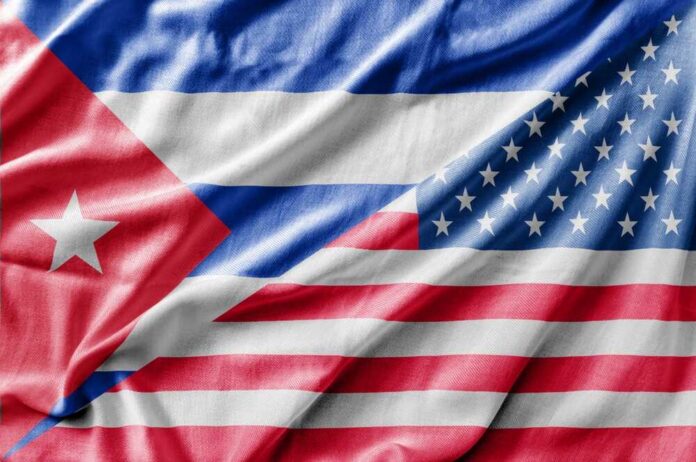
🇺🇸 🇨🇺 US President Donald Trump has vowed to "take" Cuba as the communist island plunged into darkness under a total power blackout linked to a crippling oil embargo imposed by Washington.
➡️ https://t.co/fbnjKHz526 pic.twitter.com/9uNj3vPrJo— AFP News Agency (@AFP) March 17, 2026
The timeline matters because it ties rhetoric to leverage. Multiple reports say Cuba has not imported oil since January 9, after Venezuela’s long-subsidized supply was cut off following Nicolás Maduro’s ouster earlier in January.
With Cuba’s aging population and its grid heavily dependent on fuel oil, any sustained shortfall quickly turns into cascading failures—first rolling blackouts, then industrial slowdowns, then a full collapse when reserves and patchwork fixes run out.
How the Executive Order Escalates the Pressure Campaign Beyond Past Sanctions
On January 29, Trump signed an executive order declaring a national emergency and authorizing a tariff mechanism aimed at countries that provide oil to Cuba. Legal analysis notes the order’s reliance on IEEPA and describes it as an escalation designed to cut off the regime’s energy lifeline by imposing costs on third countries.
Reporting also indicates no tariffs have been imposed yet, underscoring that the administration’s most immediate impact has come from enforcement and deterrence rather than announced duty rates.
In February, coverage described U.S. actions to stop oil tankers from reaching Cuba, including pressure involving Mexico’s state oil company, Pemex. Accounts have framed the effort as the first effective blockade since 1962—language that carries historical weight in U.S.-Cuba relations.
The administration has also linked its Cuba posture to broader national-security concerns, citing Havana’s alignment with adversarial powers and the regime’s record on human rights, while insisting on “zero tolerance” for the dictatorship.
Cuba’s Domestic Fallout: Blackouts, Fuel Rationing, and Political Concessions
Cuba’s immediate reality is less about speeches and more about power. Reports say the island needs roughly 100,000 barrels per day to sustain basic operations, yet imports have been disrupted for weeks. The results include prolonged outages affecting households and hospitals, fuel rationing, fewer flights, and a hit to tourism revenue.
Under that strain, the Díaz-Canel government has floated concessions—most notably allowing investments from the exile community—while publicly criticizing the embargo and signaling interest in talks.
For American observers, the humanitarian dimension is real, but so is the strategic one. The U.S. argument is that energy denial reduces the regime’s capacity to maintain internal control and fund security services, potentially forcing change.
The counterpoint, visible in the reporting, is that widespread deprivation can also entrench a hardline narrative in Havana and push Cuba to seek relief through alternative partners. The available sources don’t quantify how much relief those partners can realistically deliver right now.
The Constitutional and Legal Flashpoint: IEEPA Tariffs Headed for Supreme Court Scrutiny
A major unresolved issue is legal authority. A law-firm analysis highlights that the executive order’s tariff concept, built around IEEPA emergency powers, is being litigated and is on track for Supreme Court attention later in 2026.
If the Court limits or rejects IEEPA-based tariff authority, the administration’s leverage tool could be narrowed or reset. Until then, the policy environment stays uncertain for allies, suppliers, and shippers trying to gauge the risk of doing business connected to Cuba’s fuel supply.
A President doing what others failed to do…MAGA
Trump vows to 'take' Cuba as island reels from oil embargo https://t.co/FjiKWCQEKj via @@YahooNews
— kenny g (@godnavec) March 17, 2026
That legal uncertainty also matters domestically for conservatives who care about the separation of powers. Strong presidents can act quickly, but a durable strategy typically requires a clear statutory footing and accountable oversight—especially when policies resemble blockade-style enforcement with international consequences.
The reporting available so far also leaves an important gap: it is not always clear which actions are formal, published policy versus operational interdiction decisions, making transparency and legal clarity even more important.
Sources:
New Executive Order Opens Door to Tariffs on Countries
Trump vows to ‘take’ Cuba as the island is crippled by oil embargo
Cuba’s Economic Energy Crisis Trump US Explainer
Trump vows to ‘take’ Cuba as US oil embargo triggers power grid collapse