

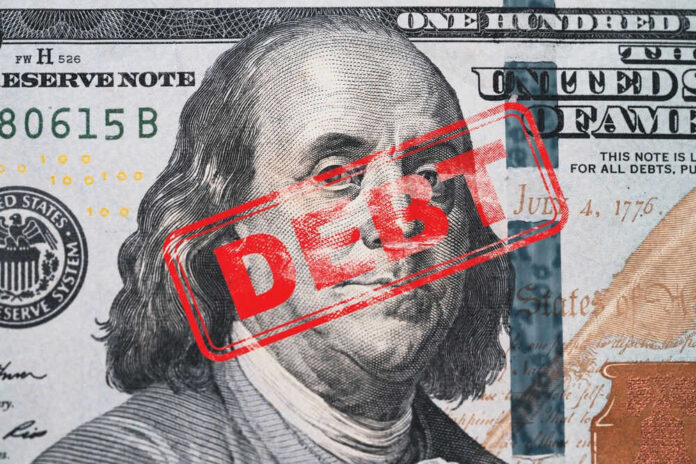
America’s national debt has exploded to $38.56 trillion—surpassing WWII levels—threatening economic freedom and burdening every taxpayer with over $113,000 in peacetime profligacy.
Story Snapshot
- U.S. gross debt hits $38.56 trillion as of February 4, 2026, up $2.35 trillion year-over-year, growing $6.43 billion daily.
- Debt now exceeds 100% of GDP, topping WWII peaks driven by war, not endless peacetime spending.
- Interest payments top $1 trillion annually, crowding out defense, Medicare, and family priorities.
- Projections show $39 trillion by mid-April 2026, with per-person debt at $113,354 and rising.
- Experts warn of an inevitable crisis—austerity, inflation, or default—without spending cuts.
Debt Milestone Signals Fiscal Alarm
The Joint Economic Committee reported on February 4, 2026, that U.S. gross national debt reached $38.56 trillion. This marks a $2.35 trillion increase from the prior year, accumulating at $6.43 billion per day.
Unlike WWII debt peaks from 1944-1950, which exceeded 70% of GDP due to war efforts, today’s levels surpass 100% of GDP amid peacetime deficits. President Trump’s administration inherits this crisis from years of fiscal mismanagement, demanding immediate action to protect American families.
U.S. debt hit $37.6T in FY 2025, 121% of GDP, and above the WWII peak. Debt growth slowed last year, but without Congress restraining spending, fiscal crises will keep coming. | Craig Eyermann pic.twitter.com/ROo48E59vm
— Independent Institute (@IndependentInst) February 4, 2026
Escalating Interest Costs Squeeze Budget
Interest payments on the debt hit approximately $1 trillion in 2025, consuming 18% of federal revenue and tripling over five years. The average interest rate stands at 3.348%, up from 1.541% five years prior. These costs now rival Medicare spending, forcing competition with defense and Social Security.
Taxpayers face an additional $6,894 per person annually, eroding savings and fueling inflation that hits working families hardest under prior administrations’ overspending.
Historical Context Exposes Peacetime Excess
U.S. public debt exceeded 70% of GDP only once before, during WWII financing from 1944-1950, after which growth and fiscal discipline reduced it. By FY2024 end, public debt hit 98% of GDP at $28 trillion.
Post-2008 recession and subsequent policies accelerated the climb, with FY2026 deficit forecasted at $1.8 trillion or 6% of GDP. Current trajectory projects 107% GDP by 2029, outpacing WWII highs without wartime justification, underscoring the need for limited government.
Stakeholders like the Congressional Budget Office project debt rising to 106% GDP by 2035 and 141% by 2046. The Committee for a Responsible Federal Budget warns a crisis is almost inevitable without reforms. Ray Dalio cautions of monetary order breakdown from debt monetization.
US debt on track to surpass record-breaking deficit at the time of WWII, report finds – The Mirror US https://t.co/jiQMx4QlNY
— CJBallay2 (@CharlesBallayLA) February 8, 2026
Crisis Risks Threaten American Prosperity
Short-term, $1 trillion interest crowds out essential spending, limiting responses to emergencies. Long-term, debt stifles growth, requiring 2.9% of GDP in permanent cuts or taxes for stability. Households bear $286,000 per-person equivalent, risking dollar reserve status globally.
CRFB outlines scenarios: austerity sparking over 3% GDP contraction, inflation eroding purchasing power like Argentina, currency depreciation hiking imports, or default freezing credit. Conservatives demand spending restraint to safeguard liberty and family values.
Sources:
What You Need to Know about the National Debt (2 Charts) – Heritage Foundation
How big is the national debt? When could recession, financial crisis hit? – Fortune
Joint Economic Committee Report – Senate JEC
What is the National Debt Costing Us? – Peter G. Peterson Foundation
Projecting Federal Deficits and Debt – NBER
Deficit Tracker – Bipartisan Policy Center
Debt Fixer – Committee for a Responsible Federal Budget