
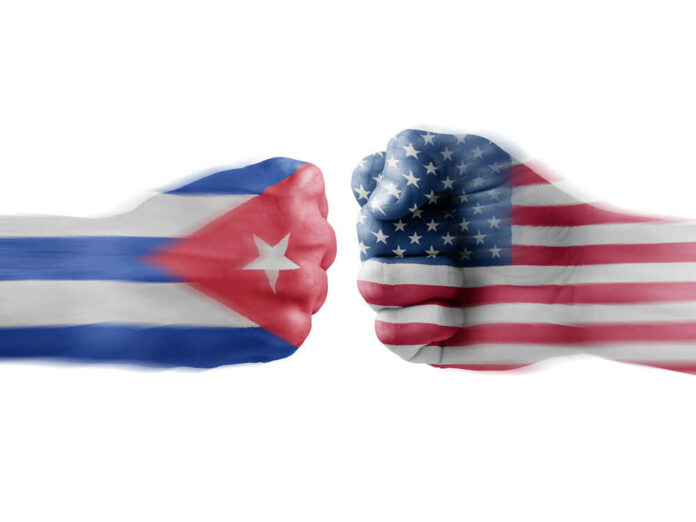
As Cuba’s socialist regime reels from the loss of Venezuelan oil and the fall of Nicolás Maduro, President Trump is openly warning Havana to “make a deal before it’s too late.”
Story Snapshot
- Trump’s operation to oust Venezuela’s Nicolás Maduro has shattered Cuba’s key alliance and revenue lifeline.
- Cuba lost dozens of security personnel in the operation and now faces intense economic strain without Venezuelan oil.
- Trump says Cuba is “ready to fall” and urges its communist rulers to negotiate a deal with Washington.
- Havana denounces the U.S. as a “terrorist” and claims America only wants control of Venezuelan oil and land.
Trump’s Venezuela Operation Puts Cuba’s Communist Regime on the Brink
After years of Cuban support for Nicolás Maduro’s authoritarian rule in Venezuela, the tables have finally turned. A U.S. operation removed Maduro from power and placed him in American custody, ending a regime that relied heavily on Cuban security advisers and intelligence personnel.
During the strikes that crippled Maduro’s inner circle, dozens of Cuban personnel embedded in his security detail were reportedly killed. That outcome sent a shock wave through Havana, which suddenly saw its influence in Caracas disrupted and exposed.
Trump tells Cuba to 'make a deal, before it is too late' https://t.co/zINhOUhhdu
— BBC News (World) (@BBCWorld) January 11, 2026
Maduro’s fall matters far beyond Caracas because Cuba’s communist economy depended for years on subsidized Venezuelan oil and related financial support. Since the era of Hugo Chávez, Venezuela shipped cut-rate crude to the island in exchange for Cuban doctors, security operatives, and political backing.
Under Maduro that bargain only deepened, making Cuba’s energy supply and hard currency earnings tightly linked to Caracas. With Maduro now ousted and Washington signaling it will steer Venezuela’s oil sector, that dependency has become a serious liability for Havana’s rulers.
“Ready to Fall”: Trump Sees Leverage, Havana Sees “Terrorism”
Speaking aboard Air Force One after the operation, President Trump bluntly declared that Cuba “looks like it’s ready to fall” because it “got all of their income from Venezuela, from the Venezuelan oil” and is “not getting any of it” now.
In Trump’s framing, the Cuban regime is financially exposed and running out of options. His message to Havana was direct: the communist leadership should make a deal with the United States before economic reality and political pressure bring the system crashing down.
Cuban president Miguel Díaz‑Canel responded by denouncing the U.S. action in Venezuela as “terrorist acts” and portraying the operation as imperialist aggression. From his perspective, Washington’s real goal is not just removing Maduro but seizing control of Venezuela’s oil reserves and land for its own benefit.
Cuban officials accuse American leaders, including key figures like Marco Rubio, of spreading a “fallacious narrative” about drug trafficking and security threats to justify intervention. They claim the United States is using familiar Cold War rhetoric to mask an old-fashioned resource grab.
Energy, Security, and the Next Phase of U.S. Pressure on Cuba
For Trump and his national security team, the post‑Maduro environment offers a chance to reshape regional power dynamics in line with core American interests. U.S. officials are already engaging major oil executives about reentering and rebuilding Venezuela’s energy sector, arguing that production should benefit Venezuelans rather than “pirates and adversaries.”
At the same time, they tie the Venezuelan and Cuban regimes to drug trafficking networks, gang migration, and even Iranian involvement, framing a tougher line as essential to protecting American communities and borders.
Cuba, stripped of Maduro’s backing and grieving fallen personnel, faces mounting economic and political stress.
Loss of subsidized Venezuelan oil threatens electricity generation, transportation, and already fragile living standards on the island. For everyday Cubans, that likely means more shortages, more rationing, and a regime doubling down on repression to hold power.
For American conservatives, the moment highlights why propping up socialist dictatorships has always been dangerous: their survival has depended on oil deals, anti-American alliances, and exporting instability throughout the region.
Trump’s warning that Cuba should “make a deal before it’s too late” signals that Washington sees Havana as the next pressure point after Maduro. The United States now holds the upper hand militarily, economically, and diplomatically.
Cuba can try to lean harder on partners like Russia or China, but those regimes know the island’s leverage has weakened without Venezuelan crude. For American voters tired of endless appeasement, the message is clear: using U.S. strength to confront hostile socialist regimes can protect our borders, our energy security, and our constitutional way of life.