

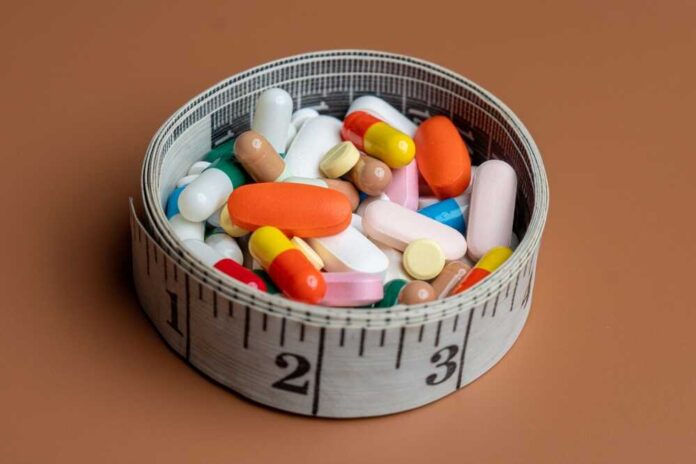
Eli Lilly’s new obesity pill offers Americans a needle-free way to fight the chronic battle against weight regain, challenging foreign dominance in a market projected to hit $95 billion by 2030.
Story Highlights
- Eli Lilly’s orforglipron pill helped patients regain just 2 pounds after switching from Wegovy and 11 pounds from Zepbound, far better than placebo.
- Company filed for FDA approval; priority review could bring it to market in months as a maintenance option for injection users.
- Analysts predict Eli Lilly’s pill to claim $13.6 billion in the oral GLP-1 segment by 2030, chipping away at Novo Nordisk’s lead.
- Safety profile matches prior studies with mild GI side effects; no liver issues observed in phase three trial.
Trial Results Show Strong Weight Maintenance
Eli Lilly announced on December 18, 2025, that its daily pill orforglipron enabled over 300 obesity patients to maintain most weight loss after switching from weekly injections. Patients had taken Wegovy or Zepbound for 72 weeks, then randomized to the pill or placebo for 52 weeks.
The trial met its main goal, proving superior maintenance versus placebo for those at a weight loss plateau. This addresses the common problem where people regain weight after stopping shots.
Eli Lilly says obesity pill helps maintain weight loss after patients switch from Wegovy, Zepbound https://t.co/4aUnOYO7W0
— CNBC (@CNBC) December 18, 2025
FDA Filing and Market Potential
Eli Lilly filed for FDA approval of orforglipron for obesity treatment. The FDA granted a priority review voucher in November, potentially shortening review to months.
Kenneth Custer, president of Lilly Cardiometabolic Health, stated the pill helps sustain hard-earned weight loss and offers a convenient alternative for millions worldwide. While causing less initial loss than injections, it positions as a needle-free maintenance therapy in the booming GLP-1 market.
Competitive Edge Over Novo Nordisk
Patients switching from Novo Nordisk’s Wegovy regained only about 2 pounds on average, drawing analyst attention. BMO Capital Markets’ Evan Seigerman noted this gives Eli Lilly a chance to capture revenue from semaglutide treatments like Wegovy and Ozempic.
Goldman Sachs forecasts pills taking 24% of the $95 billion 2030 weight loss market, with Eli Lilly’s non-peptide pill—absorbed easily without dietary limits—grabbing 60% of the daily oral share at $13.6 billion. Novo Nordisk’s oral version may launch first.
Safety Data and Next Steps
The pill’s safety aligned with prior late-stage studies. Common side effects were mild-to-moderate gastrointestinal issues. Discontinuation rates due to side effects were 4.8% from Wegovy switchers and 7.2% from Zepbound, lower or comparable to placebo groups at 7.6% and 6.3%.
No liver safety concerns emerged. Full ATTAIN-MAINTAIN trial results head to a medical meeting and peer-reviewed journal in 2026. The pill targets GLP-1 like rivals but avoids peptide restrictions.
Under President Trump’s pro-innovation policies rejecting overregulation, breakthroughs like orforglipron empower personal health choices. This American advancement counters globalist reliance on foreign drugs, aligning with conservative values of individual liberty and self-reliance in tackling obesity—a chronic disease demanding practical solutions.