
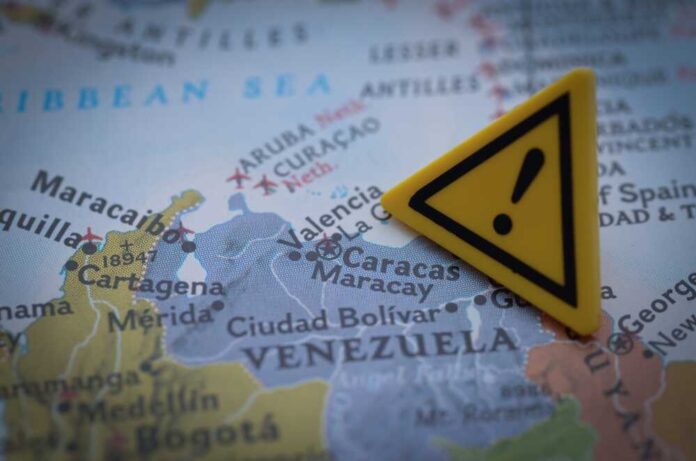
The Trump administration’s decision to end Temporary Protected Status for Venezuelans following former President Nicolás Maduro’s capture raises concerns over the safety and feasibility of their return.
Story Highlights
- Over 600,000 Venezuelans lose TPS as the Trump administration encourages their return post-Maduro capture.
- The U.S. military operation capturing Maduro aims to stabilize Venezuela and promote a safe transition.
- DHS Secretary Kristi Noem emphasizes Venezuela’s improved freedom, though migration paths remain limited.
- Celebrations in South Florida contrast with fears of ongoing risks in Venezuela.
The Capture of Nicolás Maduro
On January 3, U.S. forces captured Nicolás Maduro in Caracas, marking a significant shift in the U.S. approach to Venezuelan leadership. This operation, involving a military strike and subsequent capture, has been framed as a turning point for both Venezuela and its diaspora.
The Trump administration has positioned this as an opportunity to stabilize the country and rebuild it from within.
Following the capture, President Trump announced plans for the U.S. to oversee Venezuela until a safe democratic transition could be established. This move is reminiscent of past U.S. interventions in Latin America, but it represents a more direct involvement than previous sanctions-driven strategies.
DHS encourages Venezuelans in the US to go home "to the country they love" now that Maduro is gonehttps://t.co/M6EbGqe7Cm
— The Post Millennial (@TPostMillennial) January 5, 2026
Impact on Venezuelan Migrants
The removal of TPS affects over 600,000 Venezuelans, primarily residing in South Florida. DHS Secretary Kristi Noem has urged these individuals to return, citing improved conditions in Venezuela. However, this has been met with skepticism due to reports of ongoing instability, including journalist detentions and armed group activity.
Despite the U.S. government’s assurances, many migrants fear persecution upon return. Individuals like Luis Falcón, a former Honor Guard member, express deep concerns about safety and potential targeting by regime remnants.
Regional Reactions and Future Implications
The capture of Maduro has sparked celebrations among Venezuelan exiles, but it also raises questions about the long-term stability of the region. While the U.S. aims to facilitate a peaceful transition, power struggles between Maduro loyalists and the opposition, led by figures like Delcy Rodríguez and Maria Corina Machado, pose significant challenges.
Experts urge the U.S. to leverage this moment for meaningful change, emphasizing the need for democratic elections and sanctions relief. The situation remains fluid, with the potential for broader regional impacts, including liberation movements in neighboring countries like Nicaragua and Cuba.
Sources:
Newsmax – Kristi Noem and USCIS
KCCU – DHS Wants Venezuelans to Return Home
Atlantic Council – What’s Next for Venezuela and the Region