
Arizona Democrats just used “keeping politics out” as the reason to block a memorial for a murdered conservative activist—after the state previously honored a Democrat on the very same freeway.
Quick Take
- Gov. Katie Hobbs vetoed a Republican-backed bill that would have renamed Loop 202 in the Phoenix area for slain conservative activist Charlie Kirk.
- Hobbs said the bill improperly bypassed Arizona’s nonpartisan naming process run by the State Board of Geographic and Historic Names.
- Republican Senate President Warren Petersen said the veto politicizes recognition and breaks Arizona’s tradition of honoring notable figures regardless of party.
- The veto follows Hobbs’ earlier veto of a separate bill tied to a Charlie Kirk specialty license plate that would have benefited Turning Point USA.
Hobbs Blocks the Loop 202 Rename and Cites Process
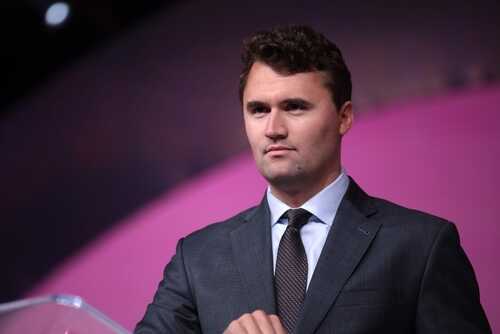
Governor Katie Hobbs vetoed legislation on March 27 that would have renamed Loop 202, a roughly 78-mile freeway that circles much of the Phoenix metro area, in honor of Charlie Kirk, the Turning Point USA founder assassinated in 2025.
Hobbs condemned the killing as “tragic and horrifying,” but said the bill “insert[ed] politics” into a function she argued should remain nonpartisan. Her veto message emphasized that highway namings are normally handled through Arizona’s State Board of Geographic and Historic Names.
The legislation did more than request recognition. It directed the Arizona Department of Transportation to place signage and effectively mandated the new name without the board’s review.
Supporters presented that approach as a straightforward way to honor Kirk quickly, while opponents argued it was exactly the kind of legislative shortcut that turns public infrastructure into a partisan trophy. With Hobbs’ veto, Loop 202 keeps its current designation, and the bill’s naming and signage provisions do not take effect.
Republicans Call the Veto the Real “Politicization”
Senate President Warren Petersen, the bill’s sponsor, framed the fight as less about bureaucracy and more about whether the state will honor an individual based on perceived political acceptability.
Petersen said the veto breaks a “long-standing Arizona tradition” and warned that public recognition now “depends on political alignment.” Republicans also pointed to precedent on the same roadway system: a segment of Loop 202 was named for Democrat Rep. Ed Pastor after his death, which supporters cite as evidence that honoring prominent figures has not always been treated as a partisan act.
JUST IN: Gov. Katie Hobbs has vetoed a bill that aimed to rename Loop 202 after Charlie Kirk. https://t.co/K2x5inEvoq pic.twitter.com/yRsRMIroYG
— ABC15 Arizona (@abc15) March 28, 2026
The dispute is complicated by the procedural contrast between the two honors. Reporting on the Ed Pastor designation indicates it went through the state board’s process rather than being imposed by statute.
That difference matters because Hobbs’ stated objection was not to Kirk’s ideology but to the method lawmakers used to bypass the board.
Conservatives frustrated by politicized institutions will recognize the familiar pattern: officials insist that politics must be removed, yet their definition of “nonpartisan” often hinges on who is being honored and who controls the process.
Two Vetoes, One Flashpoint: Turning Point USA and Public Recognition
The highway fight followed an earlier veto this month involving Charlie Kirk’s legacy. Hobbs also rejected a bill connected to a Charlie Kirk specialty license plate, a proposal described as routing proceeds to Turning Point USA.
That earlier decision sharpened the sense among Kirk’s allies that the governor’s office is drawing a firm line against state-sanctioned recognition connected to the organization he founded in Arizona. Kirk’s supporters view those moves as a refusal to separate condemnation of political violence from normal, civic commemoration.
Hobbs’ position, as reflected in the veto messaging and related coverage, is that the state should rely on established channels—particularly the geographic names board—to prevent public assets from becoming political battlegrounds.
That argument will resonate with Arizonans who want consistent rules regardless of party control. At the same time, conservatives note that “the process” is often where controversial decisions get buried, delayed, or quietly denied, especially when the subject is a high-profile conservative figure with national influence.
What Happens Next—and Why It Matters Beyond Arizona
As of coverage published March 30–31, no override attempt had been reported, leaving the veto in place for now. The practical impact on drivers is minimal—no signage changes, no map updates, no route disruptions.
The political impact, however, is immediate. Arizona remains a sharply divided state with a Democrat governor and a Republican legislature, and symbolic fights like this one tend to serve as stand-ins for larger debates about culture, credibility, and whether state institutions apply standards evenly.
The story also has echoes beyond Arizona. Related coverage referenced similar naming efforts in Florida involving a “Charlie Kirk Memorial Avenue” and a “President Donald J. Trump Boulevard,” measures that highlight how roadway namings have become a proxy war over what (and whom) the public square is allowed to honor.
For conservatives, the central question is whether state government can keep neutral procedures while still acknowledging citizens who shaped political life—and whether “nonpartisan” rules are applied consistently or selectively when the honoree challenges progressive orthodoxies.
Sources:
https://www.audacy.com/knxnews/news/politics/ap-us-charlie-kirk-highway-1st-ld-writethru
https://www.kawc.org/news/2026-03-28/arizona-gov-hobbs-vetoes-highway-name-change-for-charlie-kirk